On-street parking in Burnside
Introduction
On-street parking is a shared public space for everyone. Residents, visitors, and businesses all depend on it, and our role at the City of Burnside is to manage this space fairly and safely. With more cars on the road and bigger vehicles than ever before, parking has become a challenge that requires everyone’s cooperation and shared responsibility.
Why It Matters?
Many of the streets in Burnside were planned in the late 1800s and early 1900s, when horse-drawn vehicles and very early motor cars were the norm, long before the modern traffic volumes and large vehicles that now exceed the original design intent of our local streets.
Households today often own more than one vehicle. While the national average is about 1.8 cars per household, over half of households have two or more vehicles.
Australia’s vehicle numbers and sizes have grown significantly in recent years, putting pressure on public road space. SUVs and light commercial vehicles now account for around 80 per cent of new car sales, while passenger cars have fallen to about 14 per cent. Popular models like the Toyota Rav4 have increased by nearly 90cm in length and 16cm in width since the 1990s, while dual-cab utes such as the Ford Ranger now exceed 5.3m in length.
RAA’s 2024 road rules quiz revealed that many drivers misunderstand basic parking rules. Only 37 per cent of respondents/drivers knew that they must leave a 3m gap when parking opposite another car, and just 22 per cent knew the correct minimum 1m gap for parallel parking without marked bays. These mistakes can block access and create issues for road users, emergency services and waste collection.
Our Approach
Parking responsibly means considering others, follow the Australian Road Rules and local restrictions, and thinking about how your choices affect pedestrians, cyclists and other drivers.
Streets must remain safe and accessible for everyone, including drivers, pedestrians, cyclists and emergency services. Managing parking well helps keep our community moving and our streets pleasant.
We encourage residents to use off-street parking wherever possible such as driveways and garages. It is convenient, keeps your vehicle safe from harsh weather, reduces the risk of accidental damage and helps prevent vandalism or break-ins.
A simple conversation between neighbours often resolves issues quickly. We understand that such conversations may not be straightforward. So for help and tips on having these conversations please refer to this information on neighbourhood disputes or the Legal Services Commission South Australia.
When to Contact Council?
Most parking issues can be resolved with a quick conversation between neighbours, but there are times when you should contact the City of Burnside for assistance. Please reach out if:
- A vehicle is blocking a driveway or footpath and the owner cannot be located.
- A car is parked illegally (e.g. in a no-stopping zone, over the allotted time, too close to an intersection, or on a verge).
- You notice persistent non-compliance with parking restrictions in your street.
- You need clarification on parking rules or permits.
- There is a safety concern, such as blocked access for emergency services or waste collection.
Good Neighbour Parking Tips
- Local parking issues? Start with a friendly chat with your neighbours if parking issues keep happening. Often neighbours simply aren’t aware they’re causing a problem. A quick conversation can prevent misunderstandings and keep things positive.
- Whenever possible, reverse into your driveway rather than backing out into the street. This makes leaving safer by giving you a clear view of pedestrians, cyclists and traffic, reducing the risk of collisions.
- Arrive earlier to give yourself time to find a suitable parking space.
- Leave clearance for driveways and intersections.
- Avoid blocking bins or restricting waste collection.
- Keep 3m of road space clear on narrow streets and roads with lane lines.
- Check the signs! They are there for everyone’s safety.
Driveways, Parking & Traffic FAQs
Table of contents:
General Parking Rules
1. Where am I allowed to park on a public street in Burnside?
You can park on any public street unless signs or road markings say otherwise. Always follow the Australian Road Rules and local restrictions.
2. What do “No Stopping”, “No Parking” and “Clearway” signs mean?
No Stopping: You cannot stop your car at all, even briefly.

No Parking: You can stop for up to 2 minutes to drop off or pick up passengers, but the vehicle must be attended (driver needs to be within 3 meters of the vehicle).
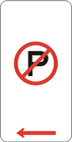
Clearway: Clearways are on busy roads during peak times. You cannot stop or park during the times shown on the sign. These signs are installed by the Department for Infrastructure and Transport – **Times can Vary.

3. Can I leave my car parked on the street for a long time?
Vehicles should be moved regularly. Leaving a car parked for extended periods can cause inconvenience and may attract enforcement if it appears abandoned.
As a good neighbour, avoid parking outside someone else’s house for too long.
4. How long can I park on a residential street before it’s considered abandoned?
There is no time limit if your car is legally parked and registered. A vehicle is only considered abandoned if it’s dumped, burnt, or clearly left by someone who has moved away.
5. Can I park on a yellow line or near a bus stop?
No. Yellow lines mean no stopping. You also cannot park within 20 metres before or 10 metres after a bus stop.
6. What is the minimum clearance I must leave from a solid white line or dividing strip?
Leave at least 3 metres between your car and the solid white line or dividing strip.
7. Can I park on narrow roads where cars park on both sides?
Only if you leave at least 3 metres of clear road space for other vehicles to pass.
Narrow roads are a frequent occurrence within the City of Burnside, with approximately 32 per cent of Council’s roads considered narrow, which can cause parking issues when vehicles park opposite each other.
When vehicles park opposite each other on narrow roads, the remaining width is typically insufficient for many cars and may not allow access for larger vehicles including Emergency Service vehicles such as fire trucks and ambulances as well as waste collection trucks.
Expiation notices may be given to vehicles that park too close to another vehicle.


8. How close can I park to an intersection or pedestrian crossing?
Parking is prohibited within 10 metres of any unsignalised intersection and 20 metres within a signalised intersection.
This rule also applies to laneways, which are classed as a road in the Australian Road Rules.

9. Can I park near a fire hydrant or post box?
Stay at least 1 metre from a fire hydrant and 3 metres from a post box.
10. Can I park facing the wrong direction?
No. You must park facing the same direction as traffic on your side of the road.
11. Can I park on a bicycle lane?
No, unless outside the times the bicycle lane operates. Taxis and buses are exempt when picking up and dropping off passengers.
12. Can I park in a Loading Zone?
Generally no, unless you are actively loading goods or passengers and your vehicle meets the requirements. Loading Zones are usually signed as “Loading Zone” or “Loading Zone – Commercial Vehicle Only.” A 30-minute time limit applies unless otherwise signed. Always check the local signage for specific rules.
13. Can I park near schools during drop-off and pick-up times?
Yes, but follow signs and keep clear of crossings and driveways. School zones have strict rules for safety.
14. Can I park a caravan, trailer, or motorhome on the street?
Yes, if it’s registered and parked legally. Council permits do not apply to caravans, trailers, or heavy vehicles.
Vehicles over 7.5m long are subject to a one-hour parking limit on roads in a built-up area unless otherwise signed, and the driver is dropping off or picking up goods.
15. Are there different rules for heavy or long vehicles?
Yes. Council may restrict these vehicles on certain streets for safety and access reasons.
16. What should I do if cars are blocking rubbish collection?
Council does not install yellow lines for bin placement. Place bins in your driveway opening instead. If issues persist, please report it to Council. We can assess and try and resolve individual situations.
17. Can we have parking restrictions installed on our street with Resident Permit Exemption (RPE)?
Council will only consider restrictions with RPE if there is high parking demand (e.g. near schools or shops, and a parking survey indicates over 85 percent parking occupancy).
Council may then undertake community consultation to determine if restrictions are supported by residents.
Please note that there is a lengthy process (approximately 3 months) with all parking related requests, due to the need to sufficiently investigate the parking demand, consult with all affected residents, order the new signage and then to install the signage.
18. Can we ban parking on one side of our narrow street (less than 7.1 m wide)?
Council generally avoids full parking bans. Banning parking opposite a driveway is unsustainable and would result in a significant loss of on-street parking around the City of Burnside if widely adopted.
Instead, letters are sent to residents explaining the 3 metre clearance rule. If issues persist, restrictions may be considered after consultation. Parking on local roads often acts as a traffic calming measure to discourage speeding and rat running, and decisions are based on the street’s role in the road hierarchy and its function.
19. Can I request yellow lines at a fire hydrant?
Fire hydrant markings are maintained by SA Water.
Driveways and Access
20. Can I park across my own driveway?
It’s illegal to park across any driveway, even your own, unless you’re dropping off passengers for less than 2 minutes. The vehicle must be attended at all times (driver needs to be within 3 meters of the vehicle).


21. Can I stop briefly across someone else’s driveway to drop off passengers?
Yes, for up to 2 minutes, however the vehicle must be attended (driver needs to be within 3 meters of the vehicle).
22. How far away must I park from a driveway?
A driver can park a vehicle up to the edge of a driveway invert but not across it.
23. Can I ban cars from parking opposite my driveway?
Parking opposite driveways is allowed unless it blocks traffic or does not leave 3 metres of clear road space for other vehicles to pass. City of Burnside Traffic Engineers will assess exceptional cases where a road is narrow (<5.5m), combined with driveway width less than 3 metres, or on narrow roads where a garage door abuts the road (or laneway) directly.
Narrow streets are a frequent occurrence within the City of Burnside, with approximately 32 per cent of Councils roads considered narrow. Owing to this fact, Council will aim to find alternatives to a complete parking ban of parking on one side of the road, so as not to set an unmanageable precedent.
When a request for banning parking on a narrow street is received by Council, the process and order that Council follows for narrow-street parking issues is listed below:
- Rangers will send out a letter to all residents on the street informing them that the street is too narrow to park opposite each other.
- Traffic Engineers will monitor the situation for a couple of months to see if parking issues continue or are resolved.
- If parking issues continue, Council will investigate whether or not parking restrictions are required on the street.
- Council will send out a letter to all residents on the street proposing parking restrictions and a questionnaire for them to complete and return.
- To proceed with the formal parking restrictions, Council requires a 33 per cent response rate and for 66 per cent of the respondents to be in favour.
Through past experience, Council finds that after sending the original letter, residents tend to take more consideration to where they park their vehicles.
24. Can I request yellow lines near my driveway to stop others parking there?
Generally no, yellow lines are only installed in exceptional cases, such as very narrow streets or cases of frequent obstruction. Exceptions may apply where a narrow street experiences high parking demand near major business precincts, schools or similar areas. Each request is assessed by City of Burnside Traffic Engineers.
If you are having issues with vehicles parking across your driveway entrance and they are restricting access to your driveway, please don’t hesitate to contact Council Rangers directly via burnside@burnside.sa.gov.au or by calling 8366 4200 (available 7 days a week between 8:30 am and 9:30 pm). Should you experience an urgent access issue, please contact SA Police on 131 444 for immediate assistance.
25. What are the criteria for installing a new driveway?
A Driveway and Gutter Crossing Application form must be completed and approved prior to any works being undertaken on a driveway. There is a fee associated with this application.
The driveway criteria are as follows (unless approved otherwise):
- Driveway width should not exceed 4.5 metres across the council verge and 5.5 metres at the kerb (this is for all single dwelling properties. A double garage doesn’t mean a resident will get approval for a wider driveway).
- A shared driveway width should not exceed 6 m across the council verge and 7 m at the kerb (shared driveway means two or more properties using the same driveway).
- Driveway minimum width is 3 metres.
- Driveway must be at least 1.5 metres from face of any Council street trees.
- Driveway must be at least 1 metre from face of any stobie pole.
- Driveway must be at least 10 metres from an intersection.
- The resident is responsible for the full cost of the modification, tree removal/replacement and installation/maintenance of their driveway.
- If the property already has a driveway that is being made redundant, then it must be reinstated to match the kerb at the resident’s expense (unless the property qualifies for a second driveway.
- Residents may organise their own contractor/builder to undertake the works.
- Council can only quote on asphalt and block paved driveways.
- Specifications, conditions and drawings are available as part of the driveway application form.
26. What are the criteria for widening an existing driveway?
A Driveway and Gutter Crossing Application form must be completed and approved prior to any works being undertaken on a driveway. There is a fee associated with this application.
The driveway criteria are as follows (unless approved otherwise):
- Driveway width should not exceed 4.5 metres across the council verge and 5.5 metres at the kerb (this is for all single dwelling properties. A double garage doesn’t mean a resident will get approval for a wider driveway.
- A shared driveway width should not exceed 6 metres across the Council verge and 7 metres at the kerb (shared driveway means two or more properties using the same driveway).
- Driveway minimum width is 3 metres.
- Driveway must be at least 1.5 metres from face of any Council street trees.
- Driveway must be at least 1 metre from face of any stobie pole.
- Driveway must be at least 10 metres from an intersection.
- The resident is responsible for the full cost of the modification, tree removal/replacement and installation/maintenance of their driveway.
- Residents may organise their own contractor/builder to undertake the works.
- Council can only quote on asphalt and block paved driveways.
- Specifications, conditions and drawings are available as part of the driveway application form.
27. Can I add a second driveway to my property?
A Driveway and Gutter Crossing Application form must be completed and approved prior to any works being undertaken on a driveway.
Multiple driveways are generally discouraged, however they may be considered in the following circumstances:
- On properties with a frontage greater than 30 metres.
- On corner properties (one access per street frontage).
- On arterial roads where the second driveway will allow vehicles to enter and exit the property in a forward direction, if this cannot be practically achieved by other means (e.g. it is not practical to have a turning area on-site).
The second or additional driveway does not conflict with Local or State Heritage requirements and Development Plan.
28. Can I modify the material of my existing driveway?
Modifying the material of a driveway (i.e. from asphalt to concrete) does not require Section 221 approval from Council as long as it is not in a Heritage Zone or any widening is to occur.
29. Can I modify a driveway within my own property boundary (not on Council Land)?
Modification of a driveway within your own property boundary does not require Section 221 approval from Council.
Driveway and Gutter Crossing Application
30. Is it legal to park on the verge (nature strip) or footpath?
Parking on verges or footpaths is not allowed because it damages landscaping and blocks pedestrian access.
31. Can I park with two wheels on the verge if the street is narrow?
No. This is illegal under the Australian Road Rules. For the safety of, and as a courtesy to, pedestrians, and for the better maintenance of the environment, you must not park (even partially) on footpaths or the verge.
Expiation notices will be given to vehicles that park on the Council verge.

32. Why is verge parking restricted in Burnside?
To protect trees, grass, and underground services, and to keep footpaths clear for pedestrians.
Utilising Off-Street Parking
33. Why should I use my driveway or carport instead of parking on the street?
It frees up space for visitors and short-term parking, reduces street clutter, and helps emergency and waste collection vehicles move easily. It also creates safer streets for cyclists who are at greater risk of cars pulling out in front of them, or opening car doors into them.
34. Why is reversing into my driveway recommended?
It’s safer because you have better visibility when leaving. It takes the same time as driving in, and reversing out promotes better sightlines to reduce risk to pedestrians and cyclists.
Residential Parking Permits
35. Am I eligible for a Residential Parking Permit?
If you live in a permit zone with parking restrictions, you may apply. Check Council’s website for details.
36. How do I apply for a permit and what documents do I need?
Apply online or at Council. You’ll need proof of residence and vehicle registration.
37. Where can I park with a Residential Parking Permit?
Only in the permit zone shown on your permit.
38. Does my permit allow me to park anywhere in Burnside?
No. It only applies to your designated permit zone.
39. Can visitors use my permit?
Yes, if you have a transferable permit. Visitor permits are also available.
Enforcement and Fines
40. What are the most common parking fines in Burnside?
Parking in No Stopping zones, across driveways, on verges or footpaths, too close to intersections or crossings, and on yellow lines.
41. How much are the fines and who sets them?
Fines are set by the SA Government and enforced by Council.
42. How do I appeal a parking fine?
You can request a review if you believe the offence was minor or apply to have the matter heard in court.
43. What happens if I don’t pay my fine on time?
Unpaid fines are referred to the State Government’s Fines Enforcement Recovery Unit.
Other Traffic Queries
44. Can I request for a Give Way sign to be changed to a Stop sign?
A Give Way sign and a Stop sign fundamentally act the same way in that a vehicle that approaches an intersection with either sign must give way to other vehicles.
Stop signs will only be used if there is poor sight distance at the intersection in accordance with the requirements set out in Australian Standards.
Generally, the non-compliance of the Give Way signs is due to driver complacency or being unable to see the signage as they approach the intersection. Therefore, replacing a Give Way sign with a Stop sign may yield minimal benefit in the resolution of the issue.
If an intersection has a higher occurrence of crashes, Council will inspect the intersection to see if the signage is clear enough. To make an intersection clearer, Council may prune overhanging trees or install pavement median bars (yellow humps/rumble bars) to help increase the visual cues of the approaching intersection. This treatment has proved successful at many locations.
The use of Stop signs where poor sight distance is not a factor can lead to driver disobedience, and lack of credibility of Stop signs. For these reasons no crash warrants the use of Stop signs.
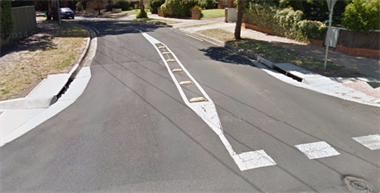
Example of Pavement Median Bar treatment
45. Can I request for a Give Way Sign to be installed at a T-intersection?
T-intersections act in the same way as a Give Way sign as per the Australian Road Rules, and therefore are not required to have signage installed if the intersection operates satisfactorily.
46. Can I get a mirror installed opposite my driveway or at an intersection?
A roadside mirror may be approved by Council if it is deemed necessary and it will not present a hazard to the resident or the general public. The cost of the mirror including installation, repair, and replacement costs will be passed on to the resident.
The installation of roadside mirrors is generally discouraged throughout the Council area as they depict a distorted image that may not accurately indicate the presence, distance or speed of approaching traffic or other road users and therefore safety at the site may be compromised rather than improved.
47. Vehicles are speeding down my street, what can I do?
Council has little to no control over speeding vehicles as it comes down to driver behaviour and is a matter for SA Police to enforce speed limits. SA Police can be contacted on 131 444.
48. I would like the speed limit changed to 40 km/hr on my Street. What can I do?
The Department for Infrastructure and Transport (DIT) has complete control over speed limits within South Australia, including all local streets within the City of Burnside. Council can propose changes to DIT, but it is at the discretion of that Department to implement the changes.
Reducing the speed limit to 40 km/hr on a single street is very unlikely to be approved by DIT. A change to a 40 km/h speed limit must be implemented on area-wide basis (natural precinct) and all residents must be consulted. It will then be referred to the Minister of Transport.
49. Can I have speed humps or other traffic calming devices placed on my street?
Council will undertake an investigation into traffic volumes and vehicles speeds along the street to see if any additional signs or traffic calming devices (i.e. speed humps) are necessary in order to improve traffic safety in the area.
For any requests relating to speeding vehicles or high-traffic volumes, Council will investigate as per the following.
Traffic Volumes
Council Roads are broken into a Road Hierarchy: Arterial Roads, Sub Arterial Roads, Primary Collector Roads, Secondary Collector Roads and Local Roads. Each road category has a suggested traffic volume as shown below.
| Road Type |
Traffic Volume |
Example |
| Arterial Road |
Unlimited |
Portrush Rd |
| Sub Arterial Road |
>6000 vpd* |
The Parade |
| Primary Collector Road |
3000-6000 vpd |
Conyngham St |
| Secondary Collector Road |
3000-6000 vpd |
Cooper Place |
| Local Roads |
1500 vpd |
Fisher St |
* vpd = vehicles per day
Council will compare the street’s traffic volume to its suggested limit to determine what actions (if any) need to be undertaken.
Vehicle Speeds
In order to evaluate speeding issues along any Council roads, Council uses the 85th percentile speed (which is the speed at or below which 85 per cent of drivers travel) to determine what actions (if any) need to be undertaken.
If it is concluded that the street has a higher traffic volume and/or a high 85th percentile speed, Council may deem that traffic calming devices are necessary.
Council will send out a letter to all residents on the street proposing parking restrictions and a questionnaire for them to complete and return.
To proceed with formal parking restrictions, Council requires a 33 per cent response rate and for 66 per cent of the respondents to be in favour.
Please note that due to the high cost of installing traffic calming devices, a budgetary allocation may need to be secured, which may mean that the installation cannot occur until the following Financial Year.
50. What control does Council have over Arterial Roads (Major Roads)?
Arterial (Major) roads are owned and controlled by the Department for Infrastructure and Transport (DIT). Council has very limited control or influence on DPTI owned roads.
The following list of Major Roads are owned and controlled by DIT:
- Fullarton Road
- Greenhill Road
- Glen Osmond Road
- Glynburn Road (North of Waterfall Terrace)
- Kensington Road (West of Penfold Road)
- Magill Road
- Mt Barker Road / South Eastern Freeway
- Old Norton Summit Road
- Penfold Road (North of Kensington Road)
- Portrush Road
- Waterfall Terrace (Glynburn to Waterfall Gully Road)
- Waterfall Gully Road
The following list of Major Roads come under Council’s control:
- Glynburn Road (South of Waterfall Terrace)
- Kensington Road (East of Penfold Road)
- Penfold Road (South of Kensington Road)
- The Parade.
If your request is in relation to one of the following on a Major Road, please contact Council:
- Parking issues (excluding bike lane and clearway related)
- Any works on the footpath or up to the roadside kerb.
If your request is in regard to one of the following on a DIT road please direct your enquiry to DIT:
- Road closures
- Clearways
- Bike lanes
- Traffic lights/signal faults
- Roundabouts (Glynburn/Greenhill, Penfold/Kensington & Penfold/Parade intersections)
- Keep Clear road markings
- U-Turn Bans and No Right Turn Bans
51. Can I hold a Street Party on my street?
Yes, Council supports the closure of local streets for conducting Street Parties or similar events, subject to the activity not causing an unsafe situation or an unreasonable negative impact upon road traffic amenity. A fee is applicable based upon an administrative charge set through the Council’s Annual Fees & Charges.
Council requires at least 4 weeks’ notice so that we can formally notify Emergency services of the street closure and so the event (road closure) can be published.
Councils asks that the applicant notifies all the affected residents of the street closure.
Application to Temporarily Close a Street for a Special Event
Asset Management
52. When will I get a new footpath?
Council has a policy to progressively upgrade all asphalt footpaths with block paved footpaths. This forms part of a long-term plan to occur over coming years.
Council aims to provide footpaths on both sides of major (arterial) roads and on, at least, one side of all other roads (where practicable).
Footpath renewals are considered based on the condition rating of the existing path and the road hierarchy, so that preference is given to highest risk areas.
Capital Works Projects
53. When will my road be resurfaced?
Road renewals are planned based on the road’s condition rating and the road hierarchy, so that preference is given to highest risk streets.
Capital Works Projects